Artificial football turfs are becoming increasingly popular across sports facilities, schools, and commercial turf businesses. Installing turf is only the beginning. Regular maintenance is essential to keep the surface safe, durable, and comfortable for players.
This guide explains the key maintenance practices that help extend the lifespan of artificial football turf and prevent common field problems.
1. Regular Cleaning and Debris Removal
Artificial turf surfaces can collect dust, leaves, plastic waste, and small stones after matches. If debris is not removed regularly, it can damage turf fibers and affect the playing experience.
Routine cleaning keeps the turf surface safe and visually appealing.
Important cleaning practices
- Remove leaves and dust using a leaf blower or soft broom
- Pick up plastic waste, bottles, and tape after matches
- Clean mud buildup in high-traffic areas
- Inspect fence edges where debris often accumulates
Why this matters
- Prevents turf fibers from flattening
- Maintains smooth ball movement
- Keeps the playing area clean and hygienic
2. Entry Area Maintenance for Players (Pro Tip)
The entry point of a football turf often collects mud, dust, and small stones from players’ footwear. Without proper control, these materials can spread across the playing surface and affect turf quality.
Maintaining the entry area helps reduce debris entering the field and keeps the turf cleaner for longer.
Simple entry maintenance ideas
- Place rubber mats or brush mats at the turf entrance
- Encourage players to clean their shoes before entering
- Install a small footwear cleaning station near the gate
- Regularly clean the entrance area to remove mud and dust
Why this helps
- Reduces dirt entering the playing surface
- Protects turf fibers from damage
- Improves overall field cleanliness
A well-maintained entry area can significantly reduce daily turf cleaning efforts.
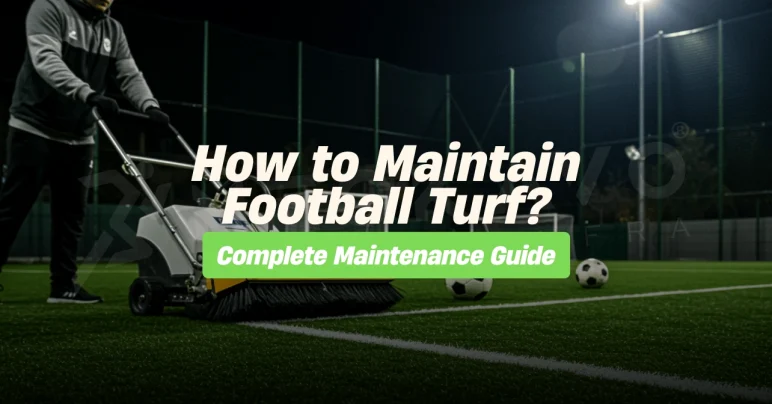
3. Brushing the Turf Surface
Continuous player movement can cause artificial grass fibers to bend or flatten over time. Brushing helps keep the turf fibers upright and distributes the infill evenly.
Benefits of brushing
- Restores natural grass appearance
- Improves player traction
- Prevents uneven playing surfaces
- Enhances ball movement
Recommended Brushing Frequency
| Turf Usage Level | Brushing Frequency |
| Low usage | Once every 2 weeks |
| Medium usage | Once per week |
| High usage | 2–3 times per week |
Turf grooming brushes or mechanical brushing machines are commonly used for this process.
4. Monitoring Infill Levels
Artificial football turfs contain infill materials such as rubber granules or sand. These materials provide cushioning and shock absorption for players.
Over time, infill levels may reduce due to player movement and weather conditions.
Signs that infill needs replenishment
- Hard playing surface
- Visible turf backing
- Reduced ball control
- Increased risk of injuries
Maintaining proper infill levels improves both player safety and playing comfort.
5. Managing Drainage and Water Flow
Good drainage is essential for maintaining artificial turf fields. Poor drainage can lead to water pooling and unpleasant odors.
Drainage maintenance tips
- Inspect drainage outlets regularly
- Remove mud or debris blocking drainage holes
- Check surrounding areas for water accumulation
- Ensure the base layer remains properly leveled
Effective drainage ensures the turf remains playable even after heavy rain.
6. Repairing Damaged Turf Areas
Certain areas of the field, especially goal zones and the center area, experience more wear and tear.
Ignoring small damages can lead to expensive repairs later.
Common turf damages
- Seam separation
- Torn turf fibers
- Uneven patches
- Loose turf edges
Timely repair prevents further damage and protects the turf surface.
7. Restricting Improper Usage
Improper usage is one of the main causes of artificial turf damage.
Certain activities should be restricted to protect the surface.
Activities to avoid on turf
- Wearing metal stud football boots
- Smoking on the turf
- Driving vehicles on the surface
- Throwing food or garbage on the field
Clear usage rules help extend turf lifespan.
8. Artificial Turf Maintenance Schedule
A structured maintenance routine helps keep the turf in top condition
| Maintenance Task | Recommended Frequency |
| Debris cleaning | Daily |
| Surface brushing | Weekly |
| Infill level check | Monthly |
| Deep cleaning | Every 3-4 months |
| Professional servicing | Once per year |
Following a routine maintenance schedule improves the durability of the field.
9. Essential Equipment for Turf Maintenance
Using the right tools makes turf maintenance easier and more effective.
Common maintenance equipment
- Leaf blower
- Turf grooming brush
- Power broom machine
- Infill spreader
- Disinfectant sprayer
These tools help maintain turf quality with less manual effort.
10. Signs Your Artificial Turf Needs Immediate Maintenance
Ignoring early warning signs can lead to serious turf damage.
Signs to watch for
- Uneven playing surface
- Hard turf feel underfoot
- Visible turf backing
- Water pooling after rainfall
- Strong unpleasant odors
Addressing these problems early can prevent major repairs.
Common Problems Caused by Poor Turf Maintenance
| Maintenance Neglected | Resulting Problem |
| No brushing | Flattened grass fibers |
| Low infill levels | Hard playing surface |
| Poor drainage | Water pooling |
| No cleaning | Bacterial buildup |
| Ignored damages | Expensive turf replacement |
Turfs with poor maintenance often lose players because the playing experience becomes uncomfortable or unsafe.
Artificial Turf Maintenance Cost Overview
Regular maintenance is far more affordable than replacing the entire turf.
| Maintenance Activity | Estimated Cost Level |
| Routine cleaning | Low |
| Brushing equipment | Moderate |
| Infill top-up | Moderate |
| Professional servicing | Medium |
| Full turf replacement | Very High |
Proper maintenance can extend turf lifespan from 5 years to around 8–10 years.
Conclusion
Maintaining artificial football turf is essential for ensuring safety, durability, and a high-quality playing experience. Regular cleaning, brushing, infill management, and proper drainage maintenance help keep the turf in excellent condition.
Turf owners who invest in proper maintenance often experience better player satisfaction, improved reputation, and higher booking rates.